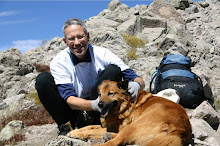
I never met Ben nor have I met his parents. Ben's mom, Carin, is dear friends with our daughter Annie. They have shared a deep love for country music. They were part of the same church, and Ben's dad, Jeff, was on that church's staff with Annie.
Just as Annie moved to Nashville, Ben was diagnosed with disease which in a breathtakingly high percentage of cases is a death sentence. Neuroblastoma, as I understand it, is a cancer that attacks the nervous system viciously, aggressively, quickly, and causing horrific suffering. The only treatment that holds much hope is as gruesome and horrible as the disease, attacking good nerves at the same time as the cancer.
Over the last 16 months this little two year old boy went through more suffering than most human beings will go through in a long life. Treatment was a nightmare of pain, one awful step at a time. Ben often lay writhing in pain, enduring the one pathway of hope that he had available to him. He lived in the hospital most of that time. He had much of his childhood stolen from him by this disease, having to become as tough and strong-willed as life gradually makes most of us over six or more decades.
Still, the stories we have heard about little Ben have been remarkable. The humor, energy, determination, courage, affection for those he loved, love of life. . . Ben was amazing. Astounding. Awesome. Awe-inspiring. Heroic. Hilarious. Heartwarming.
On November 3rd, we got word that the full extent of treatment known to modern medicine had failed, and that Ben was being sent home to die. Just when the hope had been that his body would be cancer free, tumors began popping up in his body, growing, again, viciously and aggressively, demonically, to my limited perception. Yet he fought on, giving his family many more memories.
Ben died yesterday morning, December 30th, 2008. He was almost three and a half years old.
For me, the intense suffering of a small child is a crossroad event, especially when it leads to death. One road coming through the intersection is actually a superhighway. It is characterized by an agony that articulates the very real, very honest and very tempting cry, "Where were You?"
The other "road," actually little more than a climber's trail, dangerous and meandering, staying close to the contours of the way things truly are, is definitely the way less traveled. This path is characterized by an agony that articulates a different cry. Something David Hart wrote in the Wall Street Journal a few days before Ben was born, in response to the tsunami that killed hundreds of thousands:
"For while Christ takes the suffering of His creatures up into His own, it is not because He or they had need of suffering, but because He would not abandon His creatures to the grave. . . As for comfort, when we seek it, I can imagine none greater than the happy knowledge that when I see the death of a child I do not see the face of God, but the face of His enemy."
Goodbye, Ben. I never met you, but I will never forget you.
Wednesday, December 31, 2008

Monday, December 29, 2008
The Konza
Today I walked in the Flint Hills of Kansas. It's become a ritual for me. I go either to the Tallgrass National Preserve or the Konza Prairie Trail (as today) regularly. Excellent hiking should contain elevation gain, a view, significant expenditure of energy, a bracing encounter with nature itself, beauty, and a sense of adventure. There are few places in the central Midwest where I found all of this. The Konza, however, qualifies.
And today it was in all of its glory. This, I think, was why God made these hills. The temperature on this December 29th was near 50. Not a cloud in the sky. Deep blue sky. The tallgrasses were golden, waist high, tinged with red as we looked across seas of them. I was with some of my favorite people. The white and red and burr oak trees were gnarled and dark, artistically set against the backdrop of the golden grass and blue sky. It was perfect; my body worked as it is supposed to. This is why I hike, and I still haven't come down from the joy I felt in my bones.
There. That's all. I just needed someone to tell about it. It was, today, just as the Scriptures say:
"Day to day pours out speech (referring to creation, when it is doing what it was made to do), and night to night reveals knowledge." Psalm 19:2
It was as one of the Puritans said:
"Praise waiteth for Thee, and to render it is my noblest exercise; this is Thy due from all Thy creatures, for all Thy works display Thy attributes and fulfill Thy designs; the sea, the dry land, winter cold, summer heat, morning light, evening shade are full of Thee, and Thou givest me them richly to enjoy. . . All Thy works praise Thee and Thy saints bless Thee." ("God-Honoured" in The Valley of Vision)
That's my part, our part. To bless Him consciously and from the heart as His creation praises Him by simply living out their part. Like the Konza did today.
Saturday, December 20, 2008
Glimpses
I'm a journaler. But years ago I read Leanne Payne's book, Listening Prayer, in which she recommended using journaling as a prayer to God rather than as a diary/record of what is happening in one's life. And sometime later I discovered that St. Augustine wrote his most famous book Confessions entirely to God. We are invited to listen in, but the One for whom it is written is God. Both of these dear witnesses were powerful to me.
I have tried since to write in my journals (I'm in my 31st uninterrupted year of keeping journals now) to God, and that which has the "feel" of being from God. A few of the most precious, recent words that have seemed to me to be from God Himself to me. And maybe to you. . .
"Make me know the way I should go." Psalm 143:8
"Though the fig tree should not blossom, nor fruit be on the vines, the produce of the olive fail and the fields yield no food, the flock be cut off from the fold and there be no herds in the stalls, yet I will rejoice in Yahweh; I will take joy in the God of my salvation. God the LORD is my strength; He makes my feet like the deer's; He makes me tread on my high places." Habakkuk 3:17-19
"Therefore the people wander like sheep; they are afflicted for lack of a shepherd. For the LORD of hosts cares for His flock, the house of Judah, and will make them like His majestic steed in battle." Zechariah 10:2,3 ( referred to in Mark 6 regarding Jesus, who, upon seeing the desperate masses on Israel, knew that they were like sheep without a shepherd)
"Therefore my heart is glad, and my glory rejoices." Psalms 16:9 The Hebrew word that is translated here "my glory" means "whole being." Glory is who and what we were meant for. It is our real self, which is the reflection of the living God uniquely placed in each of us. I sometimes get glimpses of who I was meant to be. I see glory, which is a reflection of the One and only, the true glory (John 1:14)
"You hold my lot." Psalm 16:5b A call to surrender and to trust.
"Your gentleness made me great." Psalm 18:35b
Does the Word of God every come off the page to you, illuminating the will of God for your life in specific situations? If so, I'd love to hear of an instance where God spoke to you.
Friday, December 12, 2008
Missional
Just over two years ago, I was introduced to a burgeoning body of thought and practice loosely collected under the title "missional." Since then, I have learned about a whole world of exploration, books, authors and speakers, conferences - all associated with the same word. And somewhere in that process, I was invited to be on the board of an organization dedicated to helping congregations be transformed into missional communities. Ever since, I have been on a dead run, trying to wrap my mind around what the word "missional" means. Since I'm supposed to know what I'm talking about now . . .
And here's a little bit of what I've learned.
It's NOT a new program to be added to the already existing programs of a church.
This is NOT business-as-usual material for churches trying to stay competitive. . . with one another.
Being missional is NOT first and foremost about having a heart for missions or sending money overseas, although that usually is true of people who are missional.
Being missional first of all calls for a different orientation from what the Church has had in an age of modernity. As our culture(s) moves from modernity to post-modernity, the Church is becoming increasingly marginalized; the culture is losing even a basic understanding of the Scriptural story; the Church is increasingly considered irrelevant to the culture. In such a context, the attractional model so dominant in modernist thinking within the Church is becoming and will become less and less effective, conservative Christianity will be villified more and more for its understanding of an exclusive Gospel and anything smacking of absolute truth, and the meaning of our language will no doubt be co-opted more and more, emptied of its meaning and replaced by meaning the culture is more comfortable with.
As a result, a missional orientation emphasizes the SENT Church, rather than the GATHERED Church. The locus of attention moves more from what we do within the Church walls (as crucial as that is and continues to be) to what we do with the other 95% of our week out in the world, being the Church on the world's turf.
Our focus becomes what we DO before what we SAY. The deeds of Jesus before the words of Jesus. Show, then tell. Lord knows there's a lot of people who are saying "We're sick of you telling us what you believe." The best way of earning the right to talk is to walk.
Being missional means becoming one of them before you can expect they will become one of us.
Missional living means being Kingdom-focused, well above local-church focused. In other words, competition between churches has to die.
The missional lifestyle is participatory. Not removed. It's something about hands-on.
Missional means servanthood over control. It really does mean coming alongside people confessing how many less answers we have than we thought we had once upon a time, but that we love them and want to be a neighbor. A good neighbor.
A missional person is little. Little trumps big.
Missional life means making partnerships with groups and organizations that you might not agree with about everything, but with whom you can partner on an issue. It means the death of the Christian "ghetto."
Being missional means community rules over program, especially the "one-size-fits-all" program.
That's what I think thus far. A great primer to introduce the subject is an article by Alan Roxburgh called "The Missional Church", found in the journal Theology Matters (2003?). Or the book by the same name, edited by Darrell Guder. Or try the blog Allelon (missional maps), or Jesus Creed by Scot McKnight. And towards the top of my list, I unashamedly encourage you to check out the work of the organization I get to work with, the Presbyterian Global Fellowship, at www.presbyterianglobalfellowship.org.
I'd love to know what you think. . .
Friday, December 5, 2008
The Boy In The Striped Pajamas
Last weekend, Susan and I went to view a movie called The Boy in the Striped Pajamas at one of those funky cinemas that is still locally owned (as opposed to being an outlet of some corporate conglomerate). We have come to expect movies in this particular cinema that are more edgy, fringe, less welll-known. The trailer on this film told us that it was something of substance, and that it was not going to make a big splash in the mainstream U.S. movie-going public.
Still, nothing really prepared us for the cost of watching this specific movie. Not in terms of the cost of admission. In terms of the knife it left in our hearts.
The story is about a dear boy whose father is an officer in the SS, during World War II. He is given a new assignment that takes him out of the beloved and safe family home in Berlin, to a site in the countryside. The young boy is torn from his friends and displaced into a quiet estate house in the middle of nowhere. Little does he know that the people he can see moving around in a neighboring setting are prisoners in a concentration camp. The one his father has been commanded to come and oversee. Little does he know that the rancid smoke that fills the sky every few days is the burning of gassed bodies of dead Jews. And how little does this little boy grasp that the young boy in striped pajamas he meets through the electrified fence of the camp one day is the victim of a malevolent evil that he, his father, and his people have propagated.
As the movie enfolds, we are drawn into a gathering sense of alarm and forboding. Something horrible is building, danger is on every side, risk and tragedy seem to lurk just around the next corner. Every part of ones being begins hoping for a life-giving ending. It is not to be.
When I read the credits at the end, I thought, "Of course. It is a Hungarian film. I should have known." The Hungarians who so willingly collaborated with Hitler in the extermination of Jews and who have spent the last 7 decades doing penance for their evil. This movie is a confession of sin, a self-flagellation filled with the despair of having no saviour to put things to right on their behalf.
If you see this movie, you will come out of it, no doubt, asking "Where is the hope?" Interestingly enough, the movie reviews are almost totally focused on style; NOT on content. There is a deliberate and intentional refusal to engage in the horrid reality of nihilism that one is confronted with as the film ends. The reviewers, almost laughingly, won't even begin to cry out with the hopelessness the movie was intended to scream at us. All they can do is to comment on incidentals, cinematic techniques, and story lines.
There is no hope in the movie. Nor in the book on which the movie was taken (by an Irish writer). Nor in world history. Nor in contemporary politics. Nor in the friendship of the boys. Nor in family relations. Nor in the authority of the State. Nor in the love of a mother. Nor in the
promise the trailer implied.
The only hope one is left with after watching this movie is from the outside. A grace which is left outside the movie and only hinted at in the love of the boys and the mother and the grandmother. A love spoken of only minimally through the lips of the pastor who buries the grandmother. Who has a name, and His name is Jesus.
Go see this movie. But only if you are prepared to bring with you the only hope this world has. The Incarnate One who identified with every wickedness known to humankind and bound it to His life, embraced it, took it as His own, and bore it to the Cross that it might die with Him.
Tuesday, October 28, 2008
A Total Waste
In May of 1934, a group of pastors from all over Germany gathered in Barmen to protest the actions of the Fuhrer, as his National Socialist movement (Naziism) arrogantly steamrolled over all opposition. The Fuhrer himself had seized control over the Church in Germany, placing his own puppet as head over it. There ensued a movment to eliminate any and all mentions of anything Jewish in the Scriptures. The State was exalted over the Church as being paramount, based upon, among other things, the belief that Creation trumps Redemption - that is, that Creation itself has established the Aryan race as the dominant and best race from the beginning, and that whatever Redemption/salvation is, it is defined and shaped by that Creation reality. Jesus' salvation, thus, was reduced to something little more than the notion that God would give victory into the hands of the Aryans.
This gathering of pastors produced a protest document called the Barmen Declaration. You should read it. It consists of 6 simple assertions of truth, followed by 6 concomitant assertions therefore of what ISN'T true. And in it they lay bear the hideous idolatry of National Socialism, and, in fact, every idolatry known to humankind. For those of you who cannot stand Karl Barth, you may gain a new honoring of him when you read the Barmen; for he was the primary author of it. Those who adopted it prayed, pled with God, worked passionately on this project, and in so doing became known as the Confessing Church. There were several hundred of them. They became a protest movement within the larger German Church, standing on orthodoxy and historical faith.
Four short years later, every single one of these men (except three) had been put to death, thrown into concentration camps, or silenced. The movement, the only public protest anyone mounted against Hitler from within Germany, was completely vanquished. It was a total waste of life and effort.
Where's the significance in that?
St. Paul had a lot to say about not living by what you see but by what God says. And so, in the context of telling the story of how much he and others had suffered, he says, "For this momentary affliction is preparing for us an eternal weight of glory beyond all comparison, as we look not to the things that are seen but to the things that are unseen." 2 Corinthians 4:17-18a And his perspective is eschatological (that is, arising out of what is true in the Age to Come). Paul is saying that what really matters in this life is participating in the life that is already true in the Age to Come. Paul believed that there are events, actions, a reality which is true THERE, but which becomes present to us HERE through faith, and begins to break in upon us. This reality is called the Kingdom of God. And when we participate in these actions, in this reality, what we do and say now lasts forever. Is full of significance, regardless of how it looks to the watching world. . . or Church.
T.S. Eliot spoke to this, at least tangentially, some 1900 years later. "I am not myself very much concerned with questions of influence, or with the publicists who have impressed their names upon the public by catching the morning tide and rowing very fast in the direction in which the current was flowing, but rather that there should always be a few preoccupied in penetrating to the core of the matter, in trying to arrive at the truth and to set it forth, without too much hope, without ambition to alter the immediate course of affairs and without being downcast or defeated when nothing appears to ensue."
As the Confessing Church was destroyed by the rising tide of Naziism, total failure was all that, honestly, anyone could see. Little would anyone have known that the document would be discovered, resurrected as WWII led into the Cold War, and as the U.S.S.R. seized East Germany as its own. And rediscovered the Barmen spoke courage into the hearts of pastors within East Germany who pastored the faithful through the nightmare of Communism. The inspiration they received from the Declaration led them to start what became a 10 year prayer movement that issued forth in 1989 into the non-violent uprising of the Church in East Germany became a central part of the fall of the U.S.S.R. in East Germany. Without so much as a bloody nose, as Dr. Jim Edwards said a few weeks ago.
Who would have known that simple acts of obedience would not only be signficant in and of themselves, expressions of the Kingdom of God breaking in and full of worth in the Age to Come. But also usable in the hands of the living God 30 and 40 years later, after all the signers were dead, to bring justice upon earth.
Makes you think twice about worth and significance in an age which knows nothing but the immediate and that which makes one feel good right now and that which brings the BIG and the measurable. It makes me think that sometimes the visible result right now might actually be the total waste.
Saturday, October 4, 2008
Built to Last
A friend of ours from an Eastern European nation entered seminary when the Iron Curtain was still a reality. In that particular country, the communist oppression was exacerbated by a megalomaniac dictator's fears and absolute control. The nation was ruled by the Secret Police, who had spies in every church, electronic bugs in every hotel room and every seminary dormitory room. Pastors were regularly accosted on Monday mornings for something they said in their Sunday sermon that sounded remotely threatening to the government. It was a cold, dark world, with no earthly hopes of freedom anywhere in sight, no tangible reason to believe anything would change in their lifetime.
But our friend fell in with 7 other like-minded seminarians, who discovered quietly that they were not only of the same mind theologically but also prophetically - that is, they believed that God was on the move invisibly, and that a new day was coming, and that they were to play a part in it. They found their way often out into the hills to pray and read Scripture together, to listen to God about what He was doing, to create a code by which they could communicate hidden messages by phone, and to determine ways to communicate hidden messages imbedded in the Sunday services they would soon lead, messages only the faithful would understand. When they graduated, they all went to their first churches and set about faithfully building up their local churches.
One of their number in particular was charismatic in personality, a bold leader, a person others naturally would rally behind. When he took a dying church in a university town, the agnostic/atheistic students, at last hungry for something more than scientific materialism, began to flock to his church. The Secret Police threatened the pastor with retribution, then murdered a member of his church. Ultimately they removed him from his parish forceably, violently. And it was that action by the Secret Police that actually began the 10 day revolt that overthrew the dictator and his communist empire. It was only right that this pastor would become a major political personage in the re-formed government, and would be made Bishop of the entire district of the church in which the 8 former seminarians served.
Only. . .somewhere in this process, the new Bishop succumbed to, what? Internal temptations? External luxuries? The insecurities deeply buried and never to be uncovered when they were fighting injustice? No one, I guess, truly knows. But as Bishop he became his own dictator, terrified of anyone that might be a threat. . . like our friend, and the other 6 seminarians. He sought the power to remain Bishop forever. He bullied and coerced. He ruined people who resisted him. He lived in opulence, while his people lived in poverty. And he betrayed his 7 loyal and dear friends. Susan and I presently are concerned because our friend has not answered an e-mail, a phone call, or a letter in 3 years. It's as if he has dropped off the face of the earth.
Where's the lasting significance in all of this? What has worth when such wrongdoing is afoot? How do you square up the years of yearning, praying, working for change, for justice, for the Name and honor of God, for the wellbeing of not only the people of God but the unsaved people of the nation. Although there are scraps of goodness to be seen lasting, almost everything they had worked for, including and maybe especially friendship that matters, all of this was basically soiled and discredited and in some cases destroyed. Where's the worth in that?
And there's no place we feel this dissonance moreso than in the Church. Right? Where's God in all of this? Or to say it in another way, "Is there anything that matters, that lasts, that makes a difference, when such destruction happens? Is there anything that carries over to the life to come?"
To which St. Paul says something breathtaking. He's writing to a church that is polluted with sexual incest between a man and his mother; by the rich of the church eating all the food at the Lord's Supper and the poorer Christians going hungry. . . regularly; with spiritual gifts being used as political weapons to gain status; with petty divisions based on favorite upfront leaders (sound familiar?); by some partaking in pagan ceremonies ostensibly in the name of Jesus. In other words, Paul is writing to a church filled with destruction. And he says, "Now if anyone builds on the foundation (of the Church) with gold, silver, precious stones, wood, hay, straw - each one's work will become manifest, for the Day will disclose it, because it will be revealed by fire, and the fire will test what sort of work each one has done. If the work that anyone has built on the foundation survives, he will receive a reward. " I Corinthians 3:12-14
To put it into the language of significance, Paul is saying, "If you tear down the Church, if you contribute to its decay and disease and pollution and discouragement and fracturing divisions, what you have done will be burned up in the Day of Judgment. But if you build up the Church and encourage faith and the growth of its members, and help people enter into the acts of love which arise from the heart of Jesus within you, all of this which comes from the One who lives in the Age to Come will of course carry over into the Age to Come." It will last forever. "Blessed are the dead who die in the LORD, says the Spirit, for they rest from their works, and their works follow them."
Try to imagine how this looks. In the Age to Come, when we are restored fully to the image of God and embodied in resurrection bodies and the fullness of life in the restored creation, what we are doing now that builds up the people of God will be present in that new Age. The fruits of our work now, no matter how much outwardly appears to have been destroyed by evildoing or foolishness while we were in this life, carry over. What it means is that Jesus wastes nothing that is in Christ.
What it also means is the Church, in a way far greater than Protestantism has grasped, is far more important than just a means to an end, or an unhappy necessity for this time on earth, gladly to be dismissed in the Age to Come. The question, as Simon Chan puts it (Liturgical Theology), is, "Is the church to be seen as the instrument to accomplish God's purpose in creation, or is the church the expression of God's ultimate purpose itself?" One thing's for sure, it's a lot more important than the way it is used as yet another means of feeding the consumeristic bent of American churchgoers. And what we do to build it, even if or when our efforts are later dismantled, have eternal significance.
I don't know where my friend is, or if he's alive or has been placed in some going-nowhere chapel, tucked away where he can seemingly do no harm to the Bishop. But I know this, wherever he has loved people, fed the poor in his congregations, told them the truth, baptized, given Communion, taught children the Heidelberg Catechism to hold their lives together in a post-communist nightmare, something is being played out in the Age to Come that lasts. Built to last.
How about you?
Subscribe to:
Posts (Atom)