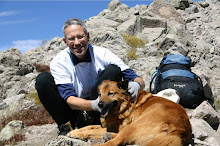
So many of my troubles in life I have had a direct hand in. And God is not shy about disciplining me over such things. But just when I fear that He is so done with me, I am overcome again and again with the experience of the love of God. Like the writer of Psalm 94. . .
"Blessed is the man You discipline, O LORD,
and whom You teach out of Your Law,
to give him rest from days of trouble. .(His discipline is all love, to give me rest)
For the LORD will not forsake his people;
He will not abandon His heritage. . . (I really am NOT alone)
If the LORD had not been my help,
my soul would soon have lived in the land of silence. (Which means I would have had to disappear, and I have NOT had to disappear)
When I thought, 'My foot slips,'
Your steadfast love, O LORD, held me up. (Even in that which hurts so much, He meets me with love, covenant love, hesed love.)
When the cares of my heart are many, (which they have been)
Your consolations cheer my soul." (comfort, real comfort. . .)
Psalm 94: 12-14, 17-19
Thursday, July 8, 2010

Monday, July 5, 2010
Life as a Poem
I must admit that when I began to get drawn into U2's magic, I was bothered by the ambiguity of their lyrics. I would ask people, "What do you think that line in the song means?" And they would inevitably say, "I don't know." So, I would listen, listen, listen, over weeks and months and years, and along the way a phrase would suddenly erupt in meaning. Sometimes it would come because someone far more astute than me would see what was in the band's heads, name it, and the lights would go on for me. Sometimes, though, I would have the revelation myself, the scales would fall off of my eyes, and I would be gripped by something so much more powerful and weighty than what I had ever imagined lay quietly in the words. And now, over several years, I am discovering that that first opening up has been followed by more discovery, deeper meaning, a seemingly endless exploration.
So, for example,at the beginning of "Walk On," on their first recording of it, Bono intones "Love, not the easy thing, the only baggage you can bring; love, it's not the easy thing, it's all that you can't leave behind. . . " You ponder it with its' double negatives, and find yourself confused and unsure of what he is saying. But over time, it becomes clear that it is exactly the message of I Corinthians 13, that this kind of love never fails, will never be erased in its impact, that indeed this love carries over into the Age to Come, and that nothing can take away the goodness or impact of acts done in love, agape love. Those two opening sentences are for me, now, both an impetus to love with a selfless love today, in my circumstances this day, and also to glimpse ahead into the Age to Come, when I will discover that every act I have done here in love will await me, be present in the Kingdom of God, and I will get to walk in the goodness of it. And this very awakening cracks me open to the wonders of that Age which is coming..
This, I am beginning to see, is the wonder of poetry. It is, usually, a short collection of words that consternate us. We don't know what the poet means, and it frustrates us. But oftentimes, there is something there that grasps us, and won't let us go. We go back to the text over and over again, turning over the thoughts that are evoked by that text, and finding over time that meaning emerges, insights we simply could not access in the first or second or third readings. And sometimes, this portal becomes an entrance into a world of meaning that has laid in wait for us.
What struck me is how the Word of God operates the same way. We encounter God in the written Word, which in that encounter becomes the Living Word, Jesus Himself personally speaking to us. And that encounter in a passage of Scripture becomes a portal through which the truth of God expands, goes deeper, takes us to new and more marvelous insights. It is so much more than data, information, or a nice linear sequential argument. Rather, it is the portal through which we enter into the Age which is coming, which is present to us through the Person and Work of Jesus Christ and by the ministry of the Holy Spirit. And in the end, it is all about Personal union with the living God, which the poets can only point towards.
This, I think, is life experienced as a poem. A portal into which the living God enters, and, by His invitation, draws us into a bigger Story, the only one that matters.
Saturday, June 19, 2010
Epitemology
A big word, one used sparingly before postmodernism - epistemology refers to how we know what we claim to know.
Recently, in his insightful book Surprised by Joy, N.T. Wright reflects on Peter's encounter with Jesus in John 21, where Peter has gone back to his old way of life after betraying Jesus, and Jesus, well, He's reappearing as the firstborn of the resurrection:
"'It is love that believes the resurrection (Wittgenstein).' 'Simon, son of John, do you love Me?' There is a whole world in that question, a world of personal invitation and challenge, of the remaking of a human being after disloyalty and disaster, of the refreshing of epistemology itself, the question of how we know things, to correspond to the new ontology [Wright probably is referring here to Jesus now clothed in a resurrected body], the question of what reality consists of. The reality that is the resurrection cannot simply be 'known' from within the old world of decay and denial, of tyrants and torture, or disobedience and death. But that's the point. To repeat: the resurrection is not, as it were, a highly peculiar event within the present world; it is, principally, the defining event of the new creation, the world that is being born with Jesus. If we are even to glimpse this new world, let alone enter it, we will need a different kind of knowing, a knowing that involves us in new ways, an epistemology that draws out from us not just the cool appraisal of detached, quasi-scientific research but also that whole-person engagement and involvement for which the best shorthand is 'love,' in the full Johannine sense of agape." p. 73
In other words, we cannot know all we need to know by using the tools of the Enlightenment, modernism, logic, or empirical calculation. Some of what is essential for our true knowing of life, meaning, and the way things truly are will involve nothing less than love, a love that moves both vertically and horizontally. A love that follows the Spirit of God who insists we give up our illusions of control and instead devote ourselves to His Presence, which makes us alive because we come to believe first that our identity, hope, being and meaning arises because we are deeply loved by God. Only then have the portal through which resurrection, miracles, and life itself flows in instead of running out.
Friday, June 18, 2010
Rowdy
Wretched broken spirit
battered by human blows,
dead soul stranded in skin and bones,
pace pace pacing pacing anxious steps
in tired tiring retiring hopelessness
this terrified, unwanted dog
But love came by,
long healing love,
quiet seeping life into death,
down down downing downing death
in loved loving beloved hopefulness
this nephesh hayah, living soul
Big brown eyes stare up,
lean body leans in,
patient wordless glance into the Age coming
thank thank thanking thanking
in adored adoring adorable helpfulness
this dog, my dog
Wednesday, June 9, 2010
Dark Night of the Soul
“Through the dark night,
Pride become humility,
Wrath becomes contentment,
Greed becomes simplicity,
Luxury becomes peace,
Gluttony becomes moderation,
Envy becomes joy,
Sloth becomes strength.”
A found prayer from St. John of the Cross
Dark Night of the Soul
Pride become humility,
Wrath becomes contentment,
Greed becomes simplicity,
Luxury becomes peace,
Gluttony becomes moderation,
Envy becomes joy,
Sloth becomes strength.”
A found prayer from St. John of the Cross
Dark Night of the Soul
Tuesday, June 8, 2010
Remember
Eleven years ago June 7th, Clyde McDowell died.
He was the most important Christian man in my life, writing major portions of the story of restoration God was crafting on my heart.
I miss him in the great unknowing that attends me often in this in-between-the-Ages time we occupy. As with all sledgehammer losses, I often still today find myself closed in, unable to breathe, claustrophobic, a pressure on my chest, anxious over the finality of death.
But when he was dying, he left me and others a great gift. He prayed, thought, and wrote about his surprising journey of suffering and deliverance. In the midst of that season of much unknowing for me, Clyde spoke of what he was being allowed to see about how things actually ARE in the Kingdom of God, which is breaking in on us.
Perhaps above all of the gifts he gave in those last days, Clyde could see that unless a grain of wheat goes down into the ground and dies, it remains alone. In fact, it can do nothing. But if it dies, it bears much fruit. Whoever would walk with Jesus must learn to die to our lives, if we would ever find our lives.
Jim Eliot put it into his own, riveting words in the early 1950’s, in one of his journals: “He is no fool who gives up what he cannot keep to gain that which he cannot lose.”
And so, Clyde put his hand in that of the One who made him, and trusted him with the no doubt countless ways God would providentially make use of his death.
And so I also pray. . .
“The risen Christ meets us at the tomb,
And turns our fear to joy.
Christ comes through our locked doors,
And turns our fear to courage.
Christ comes to daily life and work,
And turns our failure to new vision.
Christ breaks the bread,
And turns our despair to hope.
For your love and goodness
We give you thanks, O God.”
Subscribe to:
Posts (Atom)